Breaking: India records highest GDP growth in Asia | PM Modi to address nation tonight | ISRO Gaganyaan mission update ●
Breaking: India records highest GDP growth in Asia | PM Modi to address nation tonight | ISRO Gaganyaan mission update
Overview Australia has reported cases of highly pathogenic avian influenza (H5N1) in wild birds, marking a significant development in the country’s ongoing wildlife disease monitoring efforts. The detection has raised concerns among authorities due to the virus’s global spread and its potential impact on native wildlife populations.
First Confirmed Cases in Wild Birds
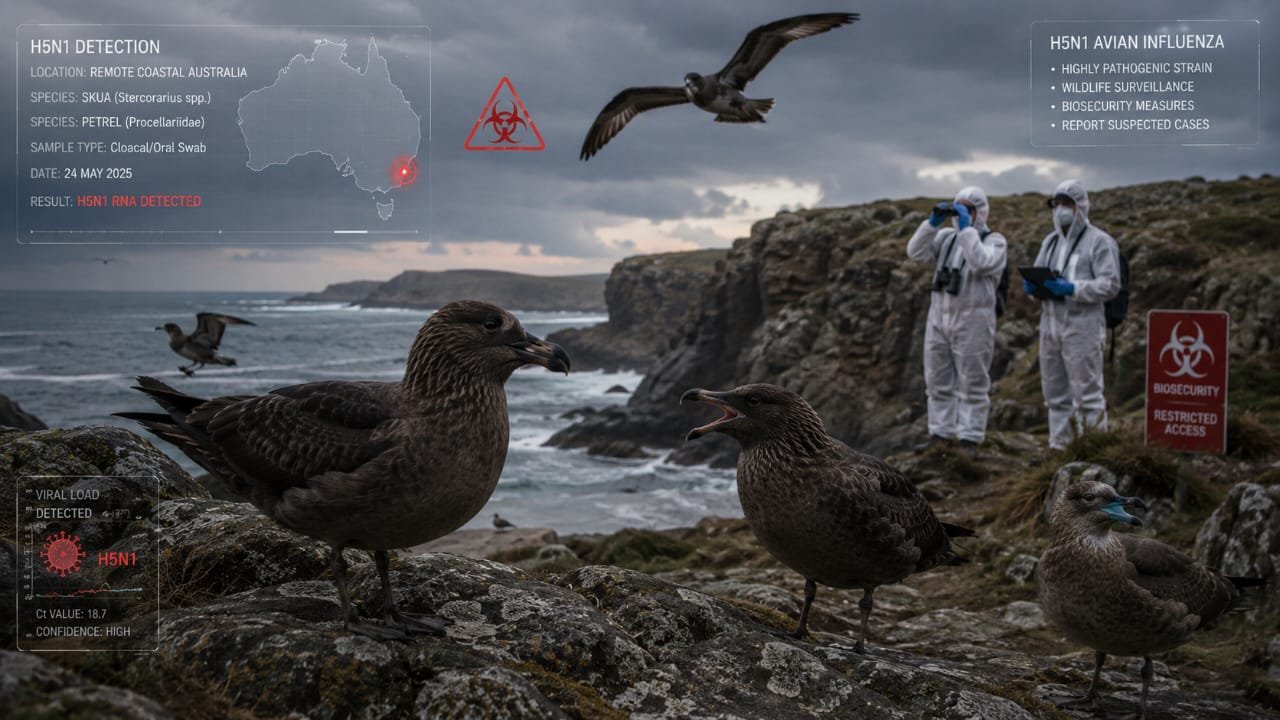
According to reports, the H5N1 virus was confirmed in wild seabirds found in Western Australia. The infected birds included migratory species such as a brown skua and a giant petrel, both discovered in the Esperance region.
These findings mark one of the most serious wildlife disease alerts in Australia in recent years, as H5N1 continues to circulate globally through migratory bird pathways.
Government and Biosecurity Response
Following the confirmation, Australian authorities have intensified surveillance and biosecurity measures. Wildlife health teams are actively monitoring additional bird deaths and collecting samples for testing.
Officials have also urged the public to avoid contact with sick or dead birds and to report any sightings to wildlife authorities to prevent potential spread.
Risk to Wildlife and Agriculture
Experts warn that while no cases have been detected in commercial poultry farms, the presence of H5N1 in wild birds increases the risk of transmission to domestic poultry populations.
Australia’s agriculture and environmental agencies are coordinating response strategies to protect both wildlife ecosystems and the poultry industry from potential outbreaks.
Global Context of H5N1 Spread
The H5N1 strain has been spreading across continents via migratory bird routes, affecting thousands of bird species worldwide. Its detection in Australia highlights the virus’s continued expansion and the importance of international surveillance efforts.
Although human infections remain rare, the virus is closely monitored due to its severe impact on animal populations.
Conclusion
The confirmation of H5N1 in wild birds in Australia underscores the growing biosecurity challenge posed by avian influenza. Authorities continue to strengthen monitoring systems and emergency response measures to limit further spread and protect wildlife and agriculture.