Breaking: India records highest GDP growth in Asia | PM Modi to address nation tonight | ISRO Gaganyaan mission update ●
Breaking: India records highest GDP growth in Asia | PM Modi to address nation tonight | ISRO Gaganyaan mission update
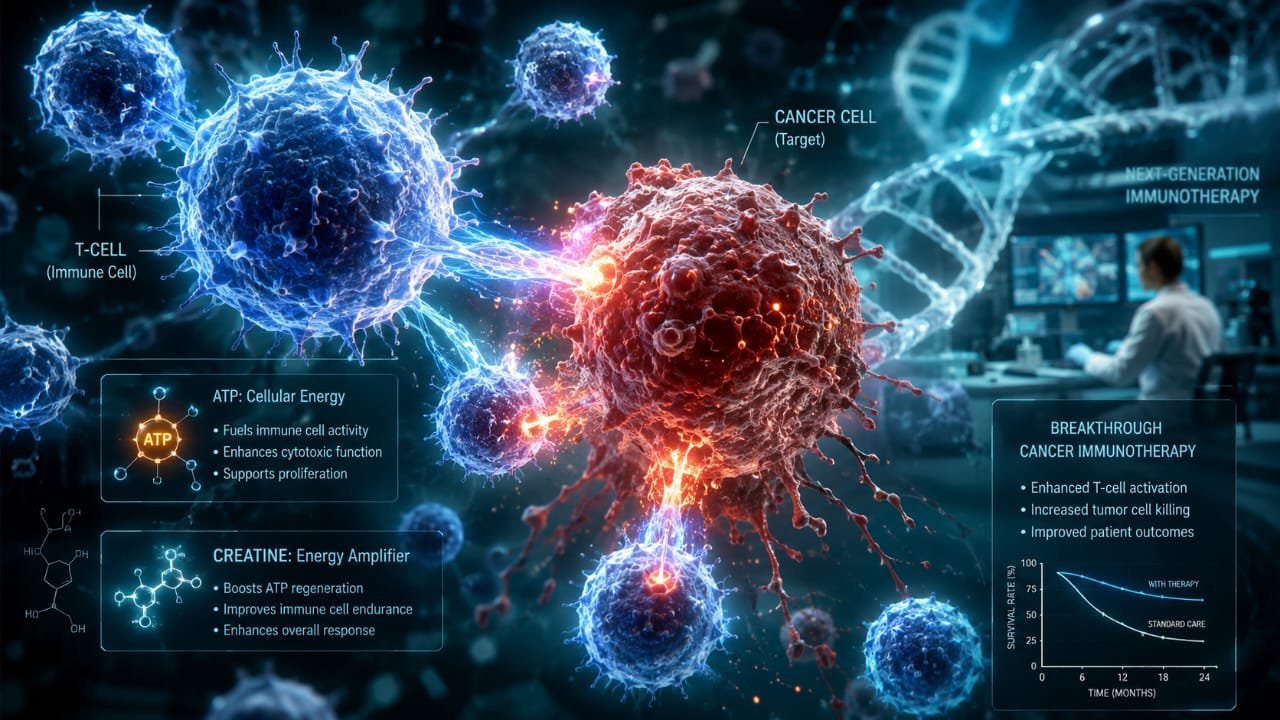
Overview A new scientific study suggests that creatine, a compound best known for its role in muscle energy and fitness supplements, may also play a significant role in improving cancer immunotherapy outcomes. Researchers have found that creatine could help “energize” immune cells, making them more effective at attacking cancer cells.
How Creatine Supports Immune Function
According to early research findings, immune cells require high levels of energy to identify and destroy cancer cells. Creatine appears to enhance this energy supply by improving cellular metabolism and supporting ATP production, which is the body’s primary energy currency.
By strengthening immune cell performance, creatine may help the immune system respond more efficiently during cancer treatment.
Potential Impact on Immunotherapy
Immunotherapy is a modern cancer treatment that boosts the body’s natural defenses to fight tumors. However, its effectiveness can vary from patient to patient.
The study suggests that creatine supplementation could potentially enhance the activity of T-cells and other immune components, improving their ability to target and eliminate cancer cells.
While results are promising, researchers emphasize that these findings are still in the early stages and require further clinical trials.
Expert Caution and Next Steps
Scientists caution that creatine is not a standalone cancer treatment. Instead, it may eventually serve as a supportive supplement alongside existing immunotherapy approaches.
Further research is needed to determine safe dosages, long-term effects, and its effectiveness across different types of cancer.
Conclusion
The study highlights a promising new direction in cancer research, where creatine could potentially enhance immunotherapy by boosting immune cell energy levels. Although still experimental, the findings open the door for future treatment innovations that combine metabolism and cancer therapy.