
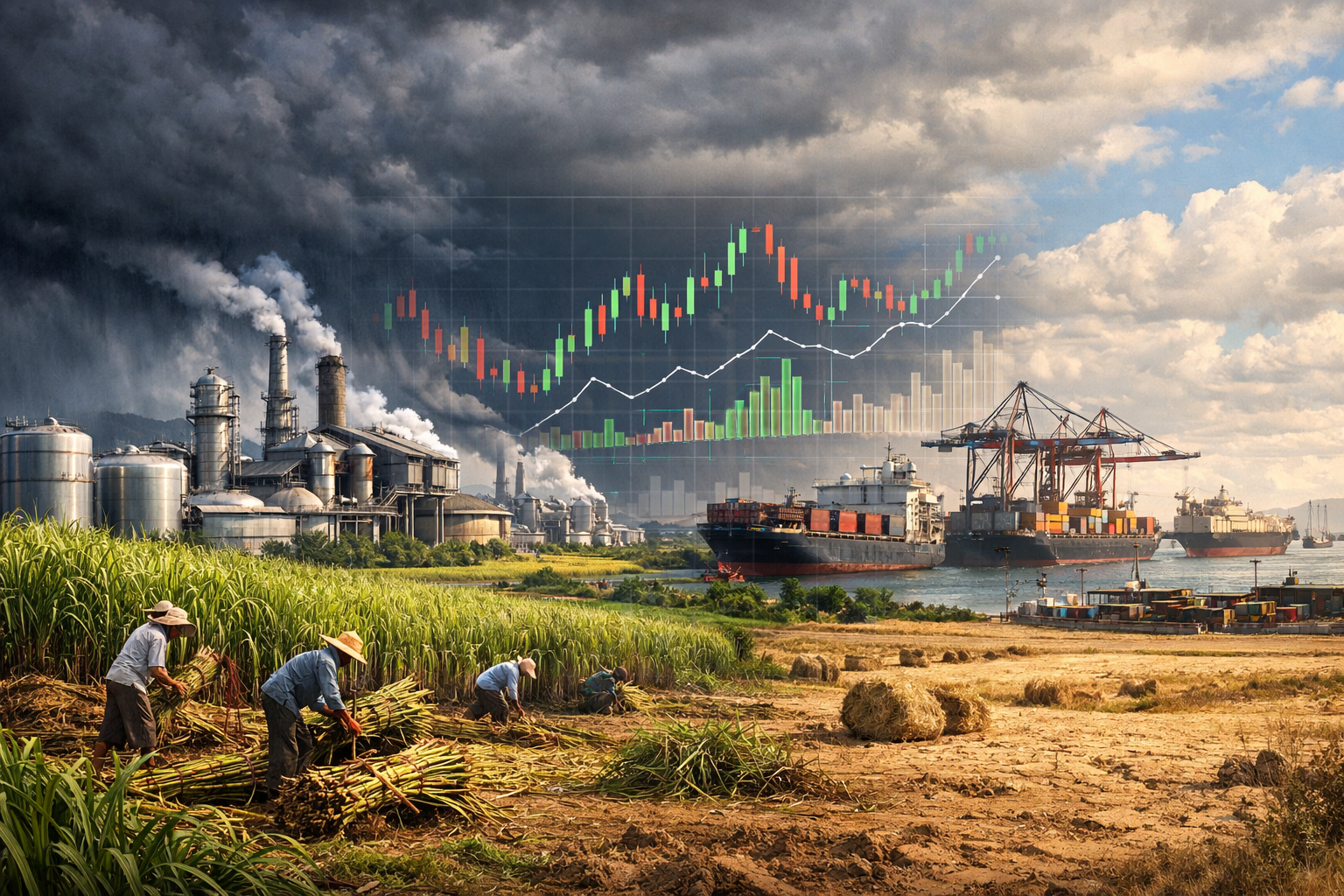
India, once one of the world's largest sugar exporters, could remain largely absent from the global sugar market for several years as weather-related production risks and rising ethanol demand reduce exportable surpluses. Industry experts and trade participants believe the combination of El Niño conditions and the government's biofuel push may significantly reshape India's sugar trade outlook through the end of the decade.
Sugar Exports Face Long-Term Pressure
For years, India played a crucial role in balancing global sugar supplies, exporting an average of nearly 6.8 million metric tonnes annually through the 2022-23 season. However, declining sugarcane availability and increasing domestic consumption are expected to limit export opportunities in the coming years. Recent estimates indicate that India's sugar production could fall below domestic demand, leaving little room for overseas shipments.
The country has already significantly reduced sugar exports and imposed restrictions aimed at ensuring adequate domestic availability and controlling food inflation. Market participants now expect export curbs to continue on a season-by-season basis as supply concerns persist.
El Niño Threatens Sugarcane Production
A major concern for the sugar industry is the emergence of El Niño weather conditions, which are typically associated with weaker monsoon rainfall in India. Reduced rainfall can delay sugarcane planting, lower crop yields, and shrink overall production. Analysts warn that prolonged weather disruptions could affect multiple harvest seasons and further tighten supplies.
India's sugar-producing states, particularly Maharashtra and Karnataka, remain vulnerable to rainfall variability. Any significant reduction in cane output could make it increasingly difficult for the country to maintain both domestic supply and export commitments.
Ethanol Program Reshaping the Sugar Industry
Alongside weather concerns, India's aggressive ethanol blending program is emerging as another major factor influencing sugar availability.
The government has been steadily increasing ethanol blending in petrol to reduce crude oil imports, improve energy security, and lower carbon emissions. As ethanol demand grows, more sugarcane and sugar derivatives are being diverted toward biofuel production instead of sugar manufacturing.
Industry estimates suggest ethanol demand could more than double over the next decade as blending targets expand and flex-fuel vehicles gain wider adoption across the country. This structural shift is expected to permanently alter how sugarcane resources are allocated within India's agricultural and energy sectors.
Could India Become a Sugar Importer Again?
One of the most significant concerns emerging from industry forecasts is the possibility that India may eventually need to import sugar if domestic production continues to lag behind demand.
The country last imported sugar following severe drought conditions linked to an earlier El Niño cycle. If future harvests are affected by unfavorable weather while ethanol consumption continues rising, India could face a similar situation by the latter part of the decade.
Such a development would have major implications for global sugar prices. India's absence as an exporter—and potential return as an importer—could tighten international supplies and increase price volatility across global commodity markets.
Impact on Global Sugar Markets
India has historically accounted for roughly 10% of global sugar exports, making its participation crucial for international trade flows. Reduced exports from India are expected to shift demand toward major suppliers such as Brazil and Thailand. However, both countries also face weather-related risks that could affect production levels.
With supply uncertainties emerging across several key producing regions, global sugar markets may remain sensitive to weather developments, government policies, and biofuel demand trends over the coming years.
Outlook for India's Sugar Sector
The future of India's sugar industry will likely be shaped by two powerful forces: climate conditions and energy policy.
While the country continues to prioritize domestic food security and ethanol production, sugar exports may remain restricted until production comfortably exceeds local demand. Industry observers expect policymakers to balance sugar availability, inflation concerns, and renewable energy goals before considering any meaningful increase in export quotas.
For global commodity traders, the message is becoming increasingly clear: India may no longer be the dependable source of sugar exports it once was, as climate risks and the transition toward biofuels redefine the industry's long-term trajectory.
Related Stories